
- Best Overall: High-performance countertop blender — Smoothies, soups and most daily blending
- Best for Smoothies/Texture: Vacuum or high-RPM smoothie blender — Ultra-smooth greens and frozen drinks
- Best Value: Mid-power jug blender — Everyday family blending on a budget
- Best Personal / Single-Serve: Personal bullet-style blender — Single servings and blend-and-go
A blender lives or dies on whether it can turn fibrous greens and frozen fruit into something silky, not gritty. The best ones pair a strong motor with a well-shaped jar that actually creates a vortex, and they are built to last. We looked at usable power, jar and blade design, how smooth the results are, ease of cleaning, and noise. Here are our winners and how to match a blender to what you make.
Our top picks
We chose these based on the criteria below. Product types are described generically so the advice stays useful across brands and model years; see each pick on Amazon for current pricing and availability.
High-performance countertop blender
Best for: Smoothies, soups and most daily blending ·
What we like
- Strong motor pulverises greens and ice smoothly
- Tall tamper-friendly jar creates a real vortex
- Handles hot soup and nut butter
- Durable build and long warranties common
Watch-outs
- Larger footprint and louder
- Premium price
The do-everything choice that lasts.
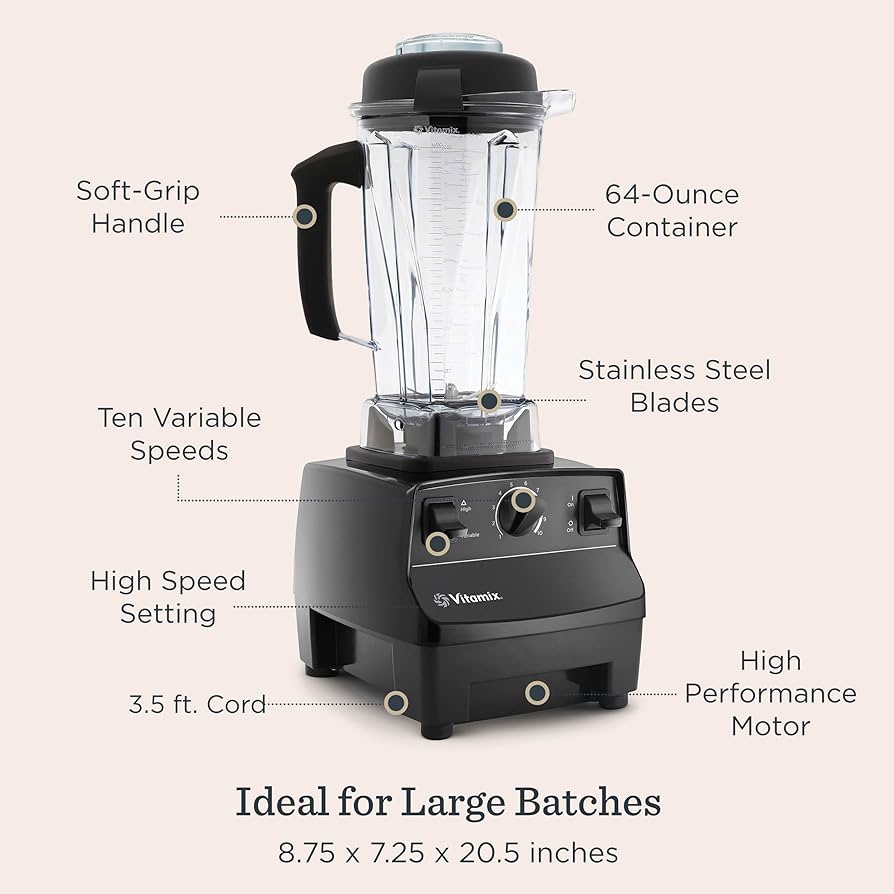 Best Overall: Vitamix 5200 Professional-Grade Countertop Blender 64 Oz
View on Amazon → Check price on Amazon → Sponsored link · we may earn a commission
Vacuum or high-RPM smoothie blender
Best for: Ultra-smooth greens and frozen drinks ·
What we like
- Very high blade speed for silky results
- Excellent with frozen fruit and leafy greens
- Tight blend with minimal pulp
Watch-outs
- Less versatile for hot/thick tasks
- Costs more than a basic jug blender
Choose this if texture is everything.
 Best for Smoothies/Texture: Ninja TWISTi Blender DUO High-Speed Smoothie Maker
View on Amazon → Check price on Amazon → Sponsored link · we may earn a commission
Mid-power jug blender
Best for: Everyday family blending on a budget ·
What we like
- Enough power for daily smoothies and shakes
- Dishwasher-safe parts on many models
- Compact and affordable
Watch-outs
- Struggles with very fibrous or frozen loads
- Shorter motor lifespan than premium units
Covers the basics without overspending.
 Best Value: Hamilton Beach Power Elite Wave Action Blender 40 Oz
View on Amazon → Check price on Amazon → Sponsored link · we may earn a commission
Personal bullet-style blender
Best for: Single servings and blend-and-go ·
What we like
- Blend directly in the travel cup
- Tiny footprint, easy storage
- Fast cleanup
Watch-outs
- Small capacity; not for batches
- Limited with hard frozen chunks
Perfect for one-cup smoothies.
 Best Personal / Single-Serve: NutriBullet Pro 900 Watt Personal Blender
View on Amazon → Check price on Amazon → Sponsored link · we may earn a commission
How to choose blenders
Before you compare specific picks, weigh up the factors below. They are the ones that genuinely affect how happy you will be in daily use — in roughly the order most buyers should prioritise them.
Motor power and real-world performance
Wattage is a rough guide, not the whole story — jar shape and blade design matter as much. That said, fibrous greens, frozen fruit and nut butters reward a stronger motor. For daily green smoothies, lean toward a high-performance model.
Jar shape and capacity
A tall, slightly tapered jar funnels food back into the blades to create a vortex, which is why some blenders make smoother results at the same power. Match capacity to your batch size — single-serve cups for one, a 2 L jug for families.
What you actually make
Smoothies and shakes are easy; hot soups, nut butters, dough and crushed-ice cocktails are demanding. If you want one machine to do the hard jobs, a high-performance blender earns its price; for shakes alone, a personal blender is enough.
Cleaning and maintenance
Removable blades clean thoroughly but add parts; sealed-blade jars are simpler. Most blenders 'self-clean' with warm water and a drop of soap on a short run. Dishwasher-safe jars are a real convenience for daily use.
Noise and build quality
High-power blenders are loud — a noise dampening enclosure helps but adds bulk. Metal drive couplings outlast plastic ones; a generous motor warranty is a good proxy for expected lifespan.
How they compare
Specs and jargon, explained
The terms you will see on spec sheets, in plain English:
| Term | What it means for you |
|---|---|
| Wattage / horsepower | Motor power. A rough guide only — jar and blade design matter as much for smoothness. |
| Jar capacity (cup / 2 L) | Match to batch size. Single-serve cups for one; large jugs for families and batch prep. |
| Blade design | Shape and angle that create the vortex. Good design blends smoother at the same wattage. |
| Variable speed / presets | Fine speed control and programs (smoothie, soup, ice) for repeatable results. |
| Jar material (Tritan / glass) | Plastic is light and shatter-resistant; glass resists scratching and odours but is heavier. |