
- Best Overall: End-grain wood cutting board — Daily prep and protecting knife edges
- Best for Hygiene: Dishwasher-safe plastic board set — Raw meat and easy sanitising
- Best Edge-Grain: Edge-grain butcher block board — Everyday use at a friendlier price
- Best Value: Bamboo cutting board — Light, affordable everyday prep
A good cutting board protects your knife edges, gives you a stable surface and is easy to keep clean. The wood-versus-plastic debate comes down to how you cook and clean. The right board is large enough to work on, gentle on your blades and matched to the tasks you do most.
Our top picks
We chose these based on the criteria below. Product types are described generically so the advice stays useful across brands and model years; see each pick on Amazon for current pricing and availability.
End-grain wood cutting board
Best for: Daily prep and protecting knife edges ·
What we like
- Gentlest surface on knife edges
- Self-healing wood fibres
- Beautiful and durable
- Stable, substantial feel
Watch-outs
- Needs oiling and hand washing
- Heavier and pricier
The best board for those who value their knives.
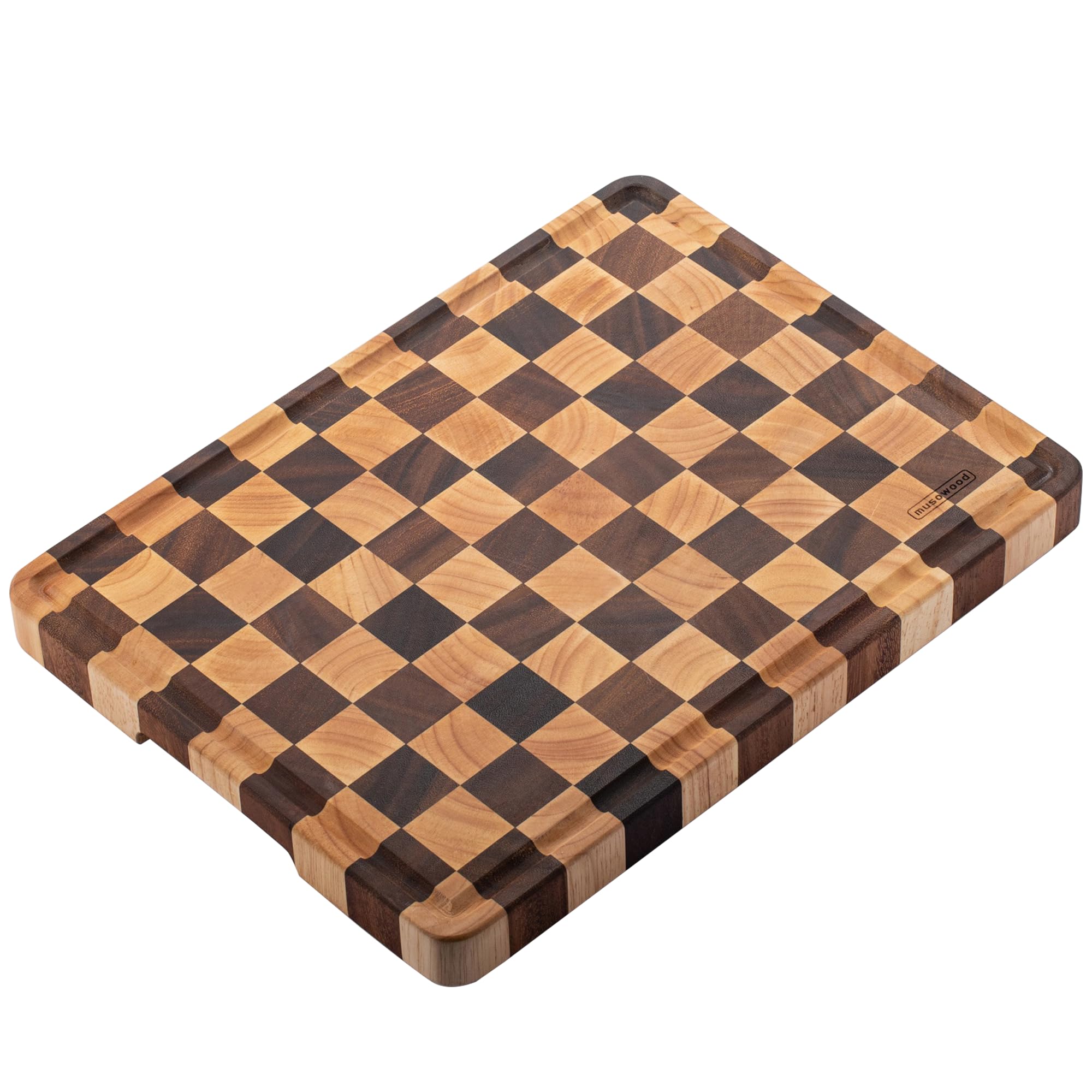 Best Overall: Muso Wood Large End Grain Cutting Board
View on Amazon → Check price on Amazon → Sponsored link · we may earn a commission
Dishwasher-safe plastic board set
Best for: Raw meat and easy sanitising ·
What we like
- Dishwasher-safe sanitising
- Colour-coded sets prevent cross-contamination
- Lightweight and cheap to replace
Watch-outs
- Develops knife grooves over time
- Less kind to edges than wood
Best for raw meat and strict hygiene routines.
 Best for Hygiene: Farberware Dishwasher-Safe Plastic Cutting Board Set of 3
View on Amazon → Check price on Amazon → Sponsored link · we may earn a commission
Edge-grain butcher block board
Best for: Everyday use at a friendlier price ·
What we like
- Knife-friendly wood surface
- More affordable than end-grain
- Sturdy and long-lasting
Watch-outs
- Shows knife marks more than end-grain
- Still needs oiling
A great-value wood board for daily cooking.
 Best Edge-Grain: WoodForChef Hard Maple Edge Grain Butcher Block Board
View on Amazon → Check price on Amazon → Sponsored link · we may earn a commission
Bamboo cutting board
Best for: Light, affordable everyday prep ·
What we like
- Inexpensive and lightweight
- Harder, water-resistant surface
- Eco-friendly material
Watch-outs
- Harder bamboo dulls edges faster
- Can crack if not oiled
The smart-money pick for a light daily board.
 Best Value: Totally Bamboo 3-Piece Bamboo Cutting Board Set
View on Amazon → Check price on Amazon → Sponsored link · we may earn a commission
How to choose a cutting board
These factors decide knife safety, hygiene and longevity.
Material (wood vs plastic)
Wood is gentlest on knife edges and naturally resists bacteria with proper care; plastic can go in the dishwasher and is easy to sanitise but develops grooves. Many cooks use wood for produce and plastic for raw meat.
Grain (end-grain vs edge-grain)
End-grain boards are the kindest to blades because the fibres part and self-heal, but cost more. Edge-grain is a sturdy, more affordable wood option.
Size and stability
A board needs room to work and must not slide. Look for a large surface and non-slip feet or a damp-cloth grip underneath.
Hygiene and cross-contamination
Use separate boards (or a colour-coded set) for raw meat and produce. Dishwasher-safe plastic makes deep sanitising simple.
Care and maintenance
Wood boards last decades but need hand washing and regular oiling. If you want zero maintenance, a dishwasher-safe board fits a busier kitchen.
How they compare
Specs and jargon, explained
The terms you will see on spec sheets and product pages, in plain English:
| Term | What it means for you |
|---|---|
| End-grain | Wood cut so the fibres stand upright; they part for the blade and self-heal, protecting edges. |
| Edge-grain | Wood with the grain running lengthwise — sturdy and cheaper, but shows knife marks more. |
| Janka hardness | A measure of wood hardness. Softer woods are kinder to edges; very hard surfaces dull them faster. |
| Dishwasher-safe | Plastic boards can be sanitised in the dishwasher; wood boards must be hand washed. |
| Board oil / conditioning | Food-safe oil that keeps wood boards from drying, cracking and absorbing odours. |