
- Best Overall: 1080p/60 webcam with good low light — Most video calls and home offices
- Best for Streaming / 4K: 4K webcam with HDR — Streamers and high-end video
- Best Value: 1080p webcam with privacy shutter — Everyday calls on a budget
- Best for Low Light: Webcam with large sensor / light correction — Dim rooms and evening calls
A good webcam makes you look sharp and well-lit on calls and streams, even when your room isn't perfect. The best ones combine a quality sensor, reliable autofocus, and sensible low-light handling, in the right field of view for your setup. We assessed image quality, low-light performance, autofocus, microphone quality and mounting. Here are our winners and how to choose.
Our top picks
We chose these based on the criteria below. Product types are described generically so the advice stays useful across brands and model years; see each pick on Amazon for current pricing and availability.
1080p/60 webcam with good low light
Best for: Most video calls and home offices ·
What we like
- Crisp 1080p with smooth 60fps option
- Handles typical home lighting well
- Fast, steady autofocus
- Decent built-in mic
Watch-outs
- Not 4K for the most demanding streams
- Plastic clip on some models
Sharp, natural and reliable.
 Best Overall: Logitech C920 HD Pro Webcam 1080p with Stereo Audio
View on Amazon → Check price on Amazon → Sponsored link · we may earn a commission
4K webcam with HDR
Best for: Streamers and high-end video ·
What we like
- 4K detail and HDR for vivid image
- Field-of-view options for framing
- Often includes software adjustments
Watch-outs
- Needs good light and bandwidth to shine
- Premium price
Choose this for maximum detail.
 Best for Streaming / 4K: Logitech Brio 4K Ultra HD Webcam with HDR
View on Amazon → Check price on Amazon → Sponsored link · we may earn a commission
1080p webcam with privacy shutter
Best for: Everyday calls on a budget ·
What we like
- Clear 1080p for meetings
- Physical privacy shutter
- Plug-and-play simplicity
Watch-outs
- Weaker in low light
- Basic microphone
Solid quality without overspending.
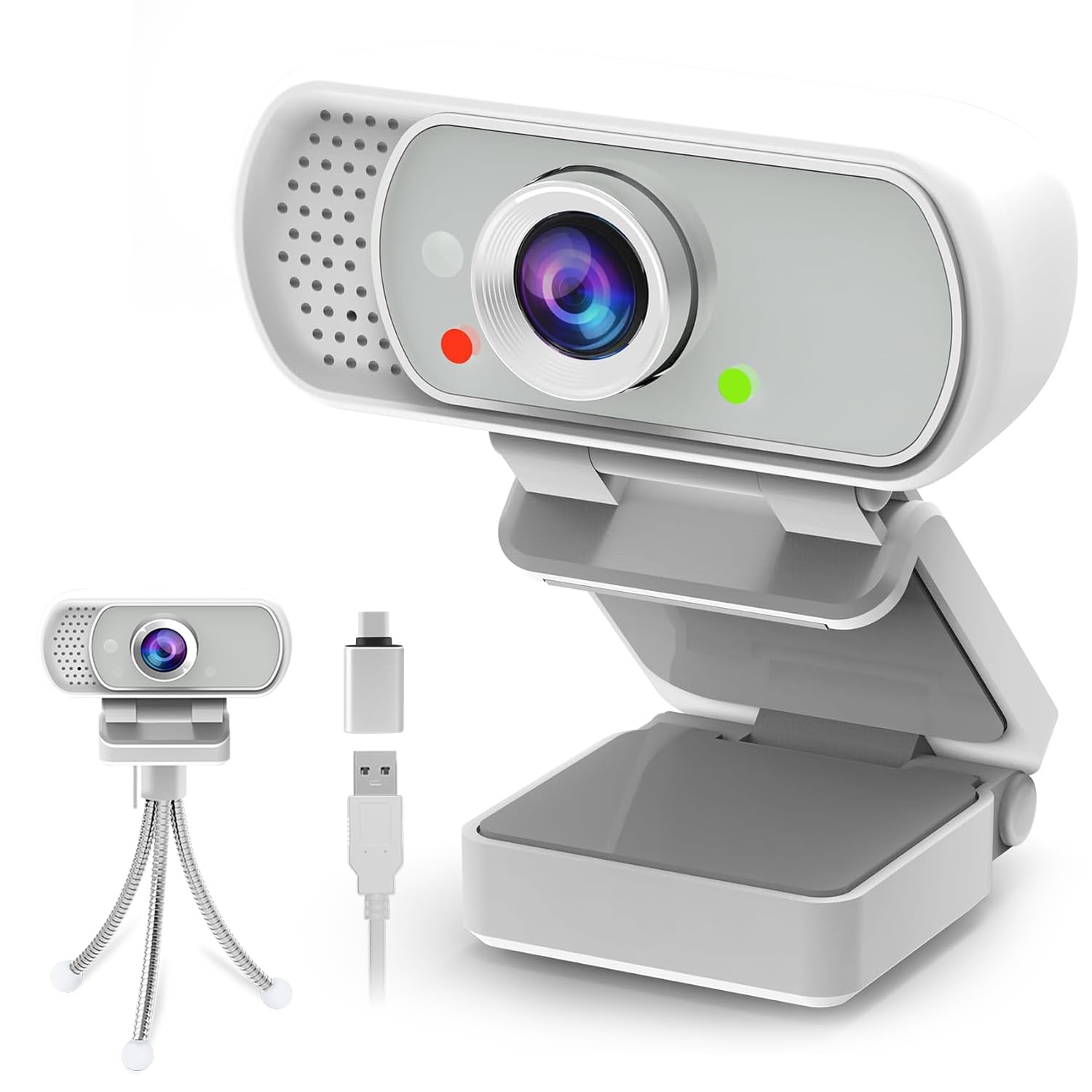 Best Value: 1080P FHD Webcam with Privacy Shutter and Tripod
View on Amazon → Check price on Amazon → Sponsored link · we may earn a commission
Webcam with large sensor / light correction
Best for: Dim rooms and evening calls ·
What we like
- Brightens dim scenes without heavy noise
- Better exposure on backlit setups
- Natural skin tones
Watch-outs
- Larger body
- Costs more than a basic cam
For when you can't fix the lighting.
 Best for Low Light: archgon 1080P/60fps Webcam with Low-Light Correction
View on Amazon → Check price on Amazon → Sponsored link · we may earn a commission
How to choose webcams
Before you compare specific picks, weigh up the factors below. They are the ones that genuinely affect how happy you will be in daily use — in roughly the order most buyers should prioritise them.
Resolution and frame rate
1080p is the sweet spot for calls and most streaming — sharp without huge bandwidth. 4K adds detail for high-end streams and cropping but needs good light and upload speed. A 60fps option looks smoother for motion; 30fps is fine for talking heads.
Low-light performance
Most rooms are dimmer than the camera would like, and this is where cheap webcams fall apart into grain. A larger sensor and good automatic exposure brighten the image cleanly. Good lighting still helps most, but a capable sensor saves you in less-than-ideal rooms.
Autofocus and exposure
Reliable autofocus keeps your face sharp as you move or hold up objects; fixed-focus cams can look soft. Smart exposure handles backlighting (a bright window behind you) so you don't become a silhouette. These everyday behaviours matter more than headline resolution.
Field of view
A narrower FOV (around 65–78°) frames one person flatteringly; a wider FOV (90°+) fits two people or shows your background, useful for group calls but it can distort and reveal a messy room. Many webcams let you choose the FOV in software.
Microphone and mounting
Built-in mics vary from passable to poor; for important calls a separate mic or headset is better, but a good dual-mic webcam suffices for casual use. Check the clip fits your monitor or laptop and whether there's a tripod thread and a physical privacy shutter.
How they compare
Specs and jargon, explained
The terms you will see on spec sheets, in plain English:
| Term | What it means for you |
|---|---|
| Resolution (1080p / 4K) | Detail level. 1080p suits most calls; 4K for high-end streams and cropping. |
| Frame rate (30 / 60 fps) | Motion smoothness. 60fps looks smoother; 30fps is fine for talking. |
| Field of view (°) | How much it captures. Narrow flatters one person; wide fits groups but can distort. |
| Autofocus | Keeps your face sharp as you move. Fixed-focus models can look soft. |
| Privacy shutter | A physical cover for the lens when the camera is not in use. |